
I have been in practice for nearly 15 years as a medical herbalist, and I have been teaching herbal therapeutics for seven years. In that time I found that I got into a rut, both of thinking and of teaching. I have developed my go-to-favourites for different conditions, and I forgot some straightforward, easy solutions that I first learned as a fledgling herbalist.
Today I listened to a podcast which featured Simon Mills, a herbalist with a vast amount of experience who has been teaching for goodness knows how long. I attended some of the seminars he ran with Kerry Bone when I was a student, and now he works for Pukka and is developing a website in collaboration with others called Herbal Reality which is described as a ‘voice for herbal medicine’ to share traditional, scientific and practical insights written by experienced herbalists and health experts from the world of herbal medicine and natural health’. So, in the podcast he was talking about spices and their therapeutic value: turmeric, ginger fennel, coriander, cinnamon, black pepper etc. He was describing spices from the East and how they can be used to build health in the body, and treat simple diseases.
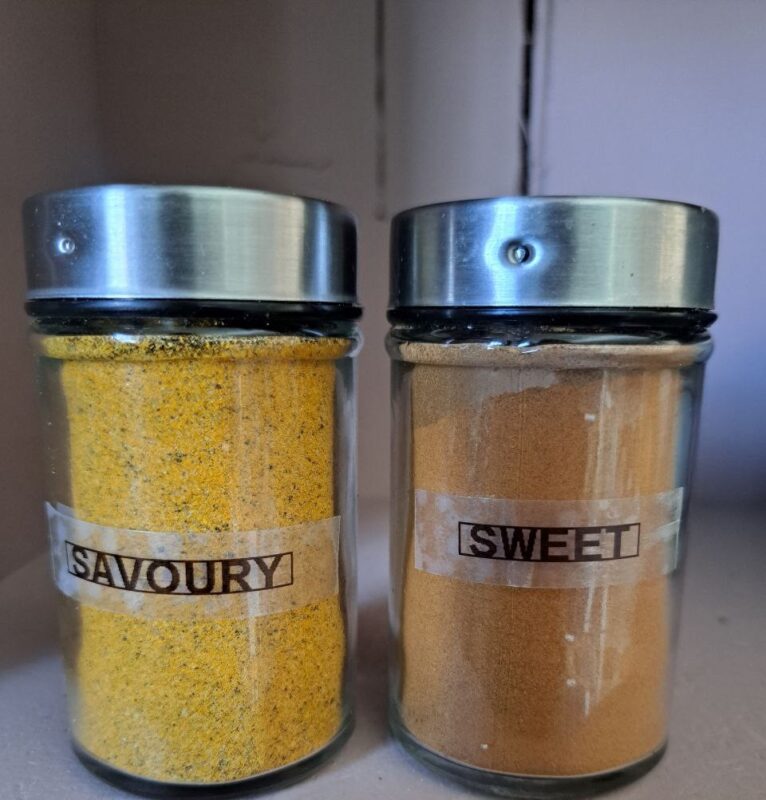
I had in my kitchen drawer four empty glass spice containers that I had bought from Amazon about the year ago, in order to develop my own spice range so that I could add medicinal spices to everyday meals without thinking. In the past I have made turmeric capsules, and fennel capsules, and other spice capsules and have treated these as medicines. To be honest, I had forgotten about my spice-jar-plan, but today I became inspired by Simon’s description of using these medicinal spices, and I become interested again in using them as foods.
Simon’s talk so inspired me that while I was listening I opened my kitchen drawer took out these spice jars, took out my bag of turmeric, my containers of black pepper, fennel, cardamom, cinnamon, and coriander etc., got my coffee grinder out and ground up my seeds fresh to make a lovely spicy yellow blend that I used straight away.
And this is how I used it…
I boiled up some millet and put it to one side, and in a stainless steel pan I fried onions, celery, mushrooms, and thin slithers of carrots. I poured in a little water after they had fried for a bit, and mixed in some fava bean paste to make a sauce. When they were cooked through I poured them over the prepared millet for a very tasty, and healthy, lunch.
So then I also made a sweet version of aromatic spices to shake over desserts. I sometimes make stewed apple or stewed rhubarb or yoghurt with berries. For this I mixed together ginger, cinnamon and cardamom.
We must always be prepared to be inspired by other people’s experience to enhance our knowledge and practise. How boring it would be if we stayed in our own little ruts for years and years, and never experienced anything new! How refreshing it is to be reminded of ways to not only include healthy spices in our diet for medicinal reasons, but also to greatly improve the taste and flavour of many dishes that we make.
I encourage you to go and listen to this podcast which can be found easily accessible on YouTube. It is on the Doctor’s Kitchen series and it is called ‘The most powerful herbs that help heal the body and prevent disease’. Simon gives a lot of practical advice on how anybody can start using kitchen spices to improve their general health and alleviate symptoms of some conditions. You will probably not be able to listen to it without getting your own spices out in your kitchen and experimenting at your next meal. Try it and see…
Thanks for reading Growing Medicine!
