
Doing the fun stuff…
I don’t just teach, see patients and write stuff.
I get to have fun…
Spring and summer may be busy gathering leaves and flowers, dodging the showers or melting in the heat, but making useful stuff from stuff I have gathered from my garden or elsewhere satisfies the alchemist in me.
It was a bumper day yesterday. My marshmallow had grown taller than me with delicate pink flowers and soft velvety leaves; that has been cut and is now wilting in my hanging baskets to be made into dried loose tea when it is ready. I retrieved Thyme, St John’s Wort, Lavender, Fumitory and more Marsh Mallow from my driers, and gathered fresh Yarrow from my herb garden and made bumper amounts of tinctures for my shelves. The dried Woundwort is soaking in oil to be made into a healing ointment…for wounds!

My husband helped me snip stalks making it a companiable activity. I think he is a little bit impressed that we have plants growing in the garden that can be turned into medicine, and that it is organic and not made in a factory, and I can replenish my stores each year. If I were to just make herb teas or poultices with this stuff, then it would all be free…
Thyme
Thyme is a potent antimicrobial and provides respiratory support, traditionally used for coughs and chest infections, but it’s also carminative and digestive. Its thymol content helps shift stubborn infections, making it invaluable in winter medicine. Use as an infusion or tincture. Strong thyme products should be used with caution if in early pregnancy as it contains thymol.
St John’s Wort
St John’s Wort supports mild to moderate depression and seasonal affective disorder, and it also acts as a nerve tonic and anti-inflammatory. Externally, the infused oil soothes nerve pain and sunburn. Not suitable with some medications—always check for interactions, particularly with hormonal contraception or SSRIs.
Lavender
Lavender is calming, carminative, and gently uplifting [thymoleptic – love that word!]. Used internally or as an essential oil topically, it eases anxiety, insomnia, and digestive tension. It’s also mildly antimicrobial and helpful in low mood with restlessness. Try a warm bath before bed or add a few drops of essential oil to a diffuser to aid sleep.
Fumitory
You may not have this in your garden, but mine arrived by chance and I grabbed some. It is absolutely brilliant for a sluggish liver and gallbladder sludge, as it has a gentle depurative action. It’s cooling, slightly bitter, and helps regulate bile flow. Historically valued in spring cleanses, it’s useful where digestion and elimination need support.
Marsh Mallow
A soothing demulcent, marshmallow calms irritated mucous membranes, from dry coughs to an inflamed digestive tract. Its mucilage coats and protects, making it ideal for gastritis, sore throats, or urinary irritation. Cold infusion best preserves its slippery virtues.
Yarrow
A classic wound and fever herb, yarrow is styptic, anti-inflammatory, and diaphoretic. It balances circulation by stimulating where there’s stagnation, but also reduces excess heat. Use internally for colds, heavy periods, or varicose veins; externally to clean wounds. Bitter but powerful, it bridges first aid and systemic support beautifully. Best fresh or tinctured.
Woundwort
To be fair, this doesn’t smell nice, but as its name suggests, woundwort is an old remedy for healing cuts and bruises so you don’t have to drink it. It’s vulnerary, astringent, and gently antimicrobial. Traditionally used as a poultice or infused oil, it speeds healing and soothes inflammation. I will make this into an ointment as it is surprisingly effective on minor injuries.
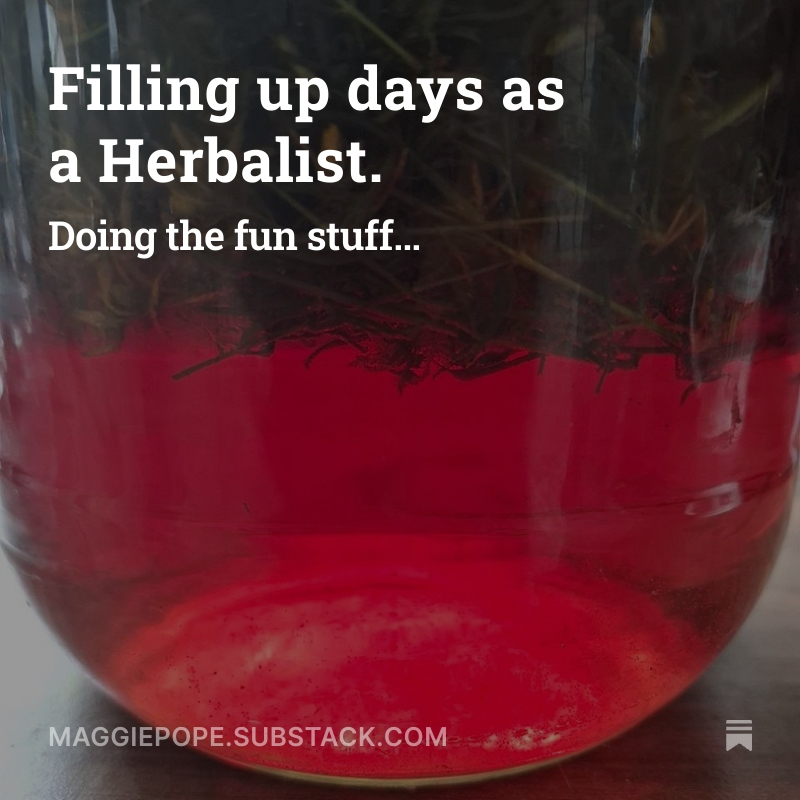
The tinctures are all made [look at the bright red liquid of my St John’s Wort tincture] and the dried herbs packed away and the woundwort infused oil is dripping. It really is possible to make a whole range of medicines from what you have in your garden, or in a friend’s…
Next month I will add a woundwort-ointment-making video to my HerbWorks membership, which my members can adapt to any herb-infused oil balm.

Just beginning with medicinal herbs?
HerbWorks is a gentle place to start. For £9.99 a month, you’ll receive accessible guidance and simple ways to explore herbal remedies safely at home—no prior knowledge needed. Each monthly live group chat offers a chance to learn, ask questions, and grow your confidence alongside a friendly community. Let HerbWorks support your first steps into herbalism—one calm discovery at a time
