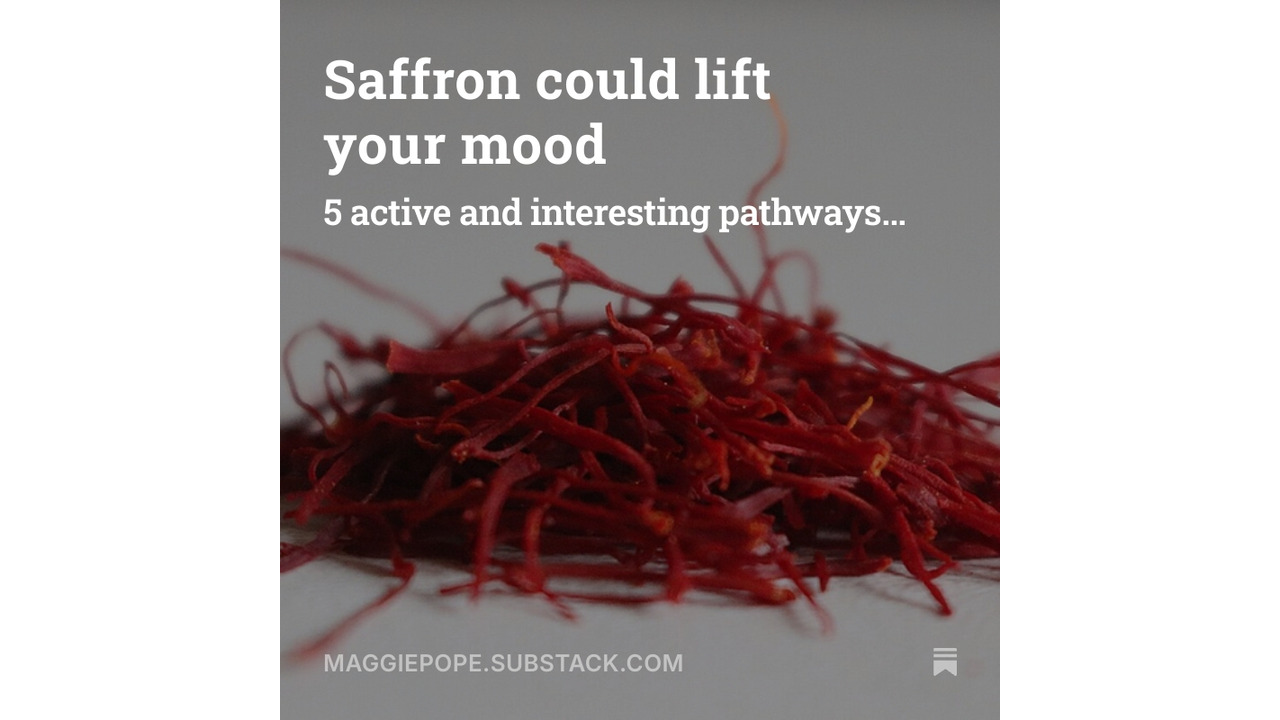
5 active and interesting pathways…
If you suffer from extreme low moods that teeter on the brink of depression, I might have some useful information for you.
There are known pathways in the brain that are implicated in the development of the state of depression. If we know what these ‘triggers’ are, we may be able to head them off before depression takes hold.
And while orthodox drugs can be effective for some people in some ways, they are designed to do just one job [like SSRIs inhibit the reuptake of serotonin into neurons after release, thus keeping it around to be effective for longer]. But herbs have hundreds of constituents. Some are ‘active’ and produce an effect by docking on receptors on cell membranes, some are buffers which prevent too harsh a response from the body, and many are just there and we don’t know what they do…
I started wondering if all the constituents in saffron could affect any [or all] of the trigger pathways in the brain in people with low mood, before depression kicks in; maybe have an effect like 5 different drugs but in one product. So, to find this out I tried to discover the main ways that depression is thought to develop in the human brain.
There are five major ways that have been implicated in the development of depression, and these are:
- Monoamine disruption. Serotonin, dopamine and noradrenaline signalling seem to weaken in the relevant brain regions.
- Excitatory-inhibitory imbalance. Glutamatergic signalling can become excessive, with excitotoxicity, while the calming effect of GABA [a sort of ‘braking system’ for the brain] is disturbed. Overstimulated neurons can be damaged rather than supported and the hippocampus is particularly vulnerable.
- Neuroinflammation and oxidative stress. Chronic low-grade inflammation can impair monoaminergic function [serotonin and other similar messengers] in some people with depression.
- Hypothalamic-pituitary-adrenal [HPA] axis dysregulation. Sustained stress produces chronic high cortisol released from the adrenal glands downstream from a signal from the brain in response to stress. Prolonged stress is linked to hippocampal atrophy [shrivelling] which physically erodes the circuitry that regulates mood.
- Failure of neuroplasticity. This is where the other pathways converge. Chronic stress, inflammation, glutamate excess, weakened monoamine signalling and hippocampal shrivelling together erode the brain’s ability to adapt, update and recover. Mood regulating circuits then stay locked into persistent negative patterns, which is much of what we recognise clinically as depression.
So, what did I find?
Saffron’s main active constituents are crocin, crocetin and safranal. They are what give saffron its colour and aroma. Laboratory and animal research suggests they may touch every one of the five pathways.
- Monoamine disruption. Crocin and safranal appear to slow the reuptake of serotonin, dopamine and noradrenaline. That is a similar principle to many antidepressants but spread across all three messengers rather than just one.
- Excitatory-inhibitory imbalance [accelerator and brake]. Safranal seems to support GABA, the brain’s braking system. Crocin appears to calm excessive glutamate activity, protecting nerve cells from overstimulation.
- Neuroinflammation and oxidative stress. Crocin is a powerful antioxidant and lowers inflammatory signals in animal studies.
- HPA axis dysregulation/stress. In stressed animals, saffron constituents help bring cortisol back down.
- Failure of neuroplasticity [lack of brain flexibility]. Crocin increases BDNF [brain-derived neurotrophic factor], the ‘fertiliser’ that helps the brain rewire and recover, particularly in the hippocampus.
I think my hunch was right, at least on paper. In theory saffron may act like several different approaches in one and could be useful for those of us who are prone to low moods.
But it isn’t only theory. Several clinical trials in people with mild to moderate depression, usually using 30 mg of saffron a day, have found it works better than placebo. In a few small trials it did about as well as standard antidepressants. The studies are small and short, so there’s more to learn, but the signs are encouraging.
You may feel like rushing out and buying saffron if you feel low, but a word of caution: dosage information for saffron is limited, although the 30 mg a day used in trials was well tolerated. Very, very high doses are toxic [I’m talking 3 g a day], and you should check with your GP or a professional herbalist if you are currently on orthodox medication. Avoid saffron supplements if you are pregnant and seek advice first if you are breastfeeding; ordinary cooking amounts are fine.
It is an expensive spice, but I found a little research which seemed to show that the crocus petals also had similar actions.
That’s why I have planted Crocus sativus in my garden – I’m going to have a play with making medicine with the petals when they appear and see what experimenting at home shows me…
And another caution: saffron crocus has a highly poisonous lookalike, the autumn crocus [Colchicum autumnale], which flowers at the same time of year. Please don’t experiment unless you’re completely sure of what you’re growing.
NB. If your low mood is deepening, lasting more than a couple of weeks, or you’re having thoughts of harming yourself, please talk to your GP, or call Samaritans on 116 123 at any time.