
Grass pollens may produce symptoms from April through to July. Tree pollens may cause symptoms from as early as February to as late as September, this varies due to when the tree species involved shed their pollen. Other pollens and moulds may cause symptoms at other times, and house dust/animal fur/mould and fungal spores will cause symptoms all year round when you are in contact with them.
Herbal medicine can treat hay fever and allergic rhinitis in conjunction with dietary and lifestyle changes in most cases.
But people are individuals and what works for one won’t work for another. With an allergic reaction such as this much benefit will be gained by improving your general health with a change of diet, reducing stress levels, and making sure channels of elimination are in good working order.
During an allergic reaction of whatever cause the linings of your nose and eyes are oversensitive, and your immune system is alerted to the irritation and sends infection-fighting white blood cells to the source of the area that is being irritated. These cells release molecules which cause the mucous membranes to swell and produce mucus as a protection.
As well as a runny nose you may also suffer from of allergic conjunctivitis. This occurs in both eyes, causing watery red rims, bloodshot, very itchy under the eyelids and the area around the eyes may look puffy. This again is caused by the body’s response to something it regards as harmful. Pollen or house dust mites coming into contact with the surface of the eyeball and the inner lining of the eyelids can cause this hypersensitive reaction in the same way that they do with the nasal mucosa.
How can herbs help?
We want to reduce the symptoms, but also to remove the causes of the allergic reaction if possible, and to modulate the excessive immune response. It is also useful to support the nervous system to help reduce stress.
- Symptom control:
Anti-catarrhals, Ribwort Plantago lanceolata, Elderflower Sambucus nigra,
Astringents Eyebright Euphrasia spp.
Anti-allergy action: Stinging nettle, Urtica dioica.
- Immune modulator:
Echinacea, Echinacea angustifolia
- Nervine tonic:
Chamomile, Matricaria recutita
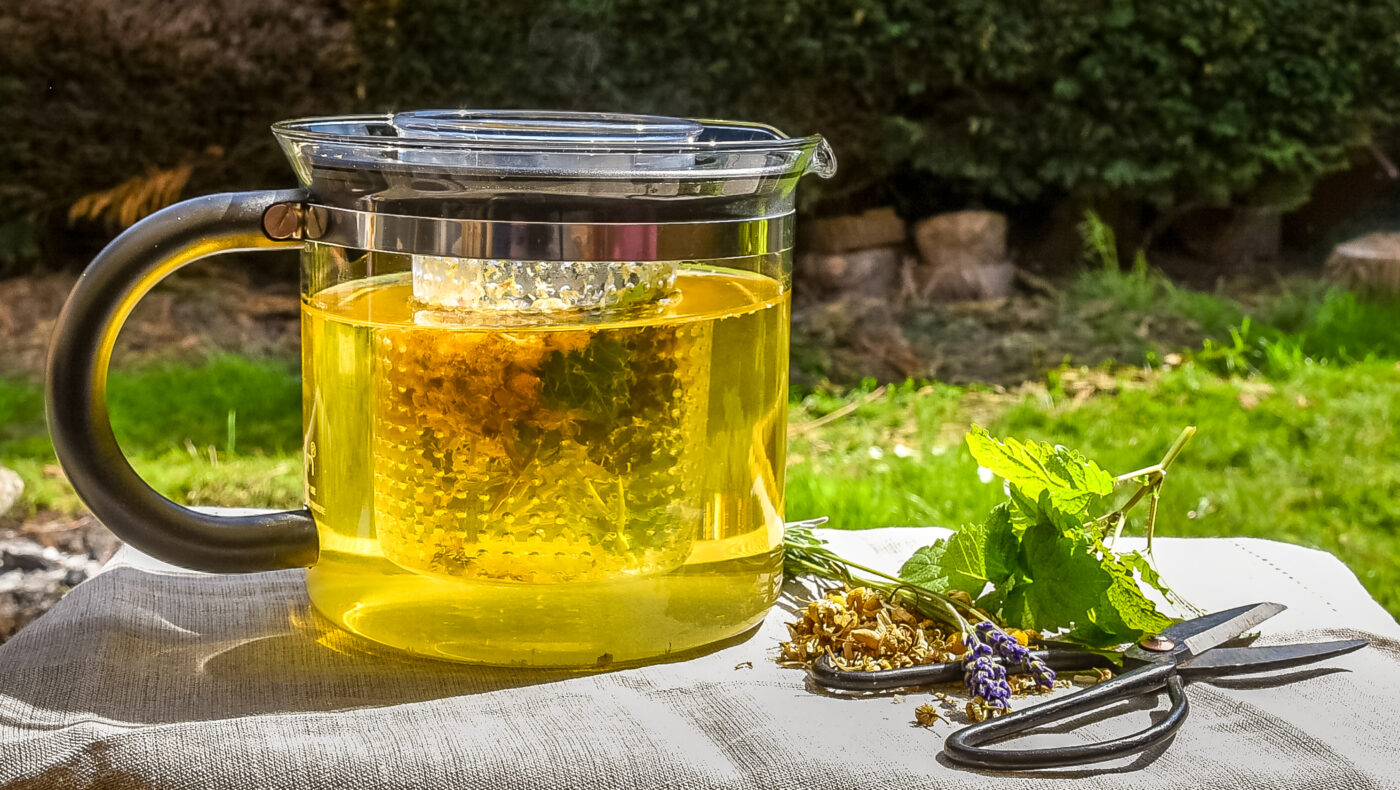
A simple tea drunk 3 times a day before your hay fever season starts can really reduce symptoms.
Elderflower, Ribwort, Eyebright, Nettle leaf, Echinacea, and Chamomile call all be bought as dried loose herb online from suppliers such as Baldwins.co.uk and you can mix up your own blend.
Place a tablespoon in a cafetière and steep 10-15 minutes. Strain and drink 3 cups a day.
If a more radical approach is needed, make an appointment and we can sort out a tailor-made prescription just for you…
